Sensory Kits and Sensory-Friendly Performances help More Guests Feel at Home at the Denver Performing Arts Complex
News List
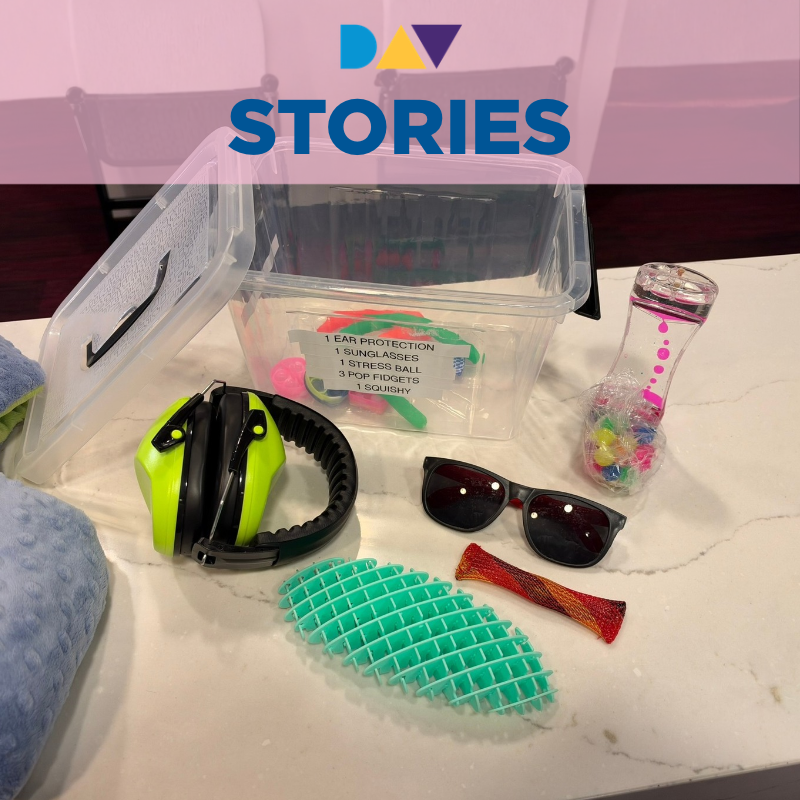
For some guests and their families, walking into a large theater with thousands of other people can be overwhelming. Denver Arts & Venues (DAV) and Colorado Ballet are working together to make it easier, with sensory kits available at the Denver Performing Arts Complex and sensory-friendly ballet performances that have grown from a small pilot into some of the company’s most in-demand events.
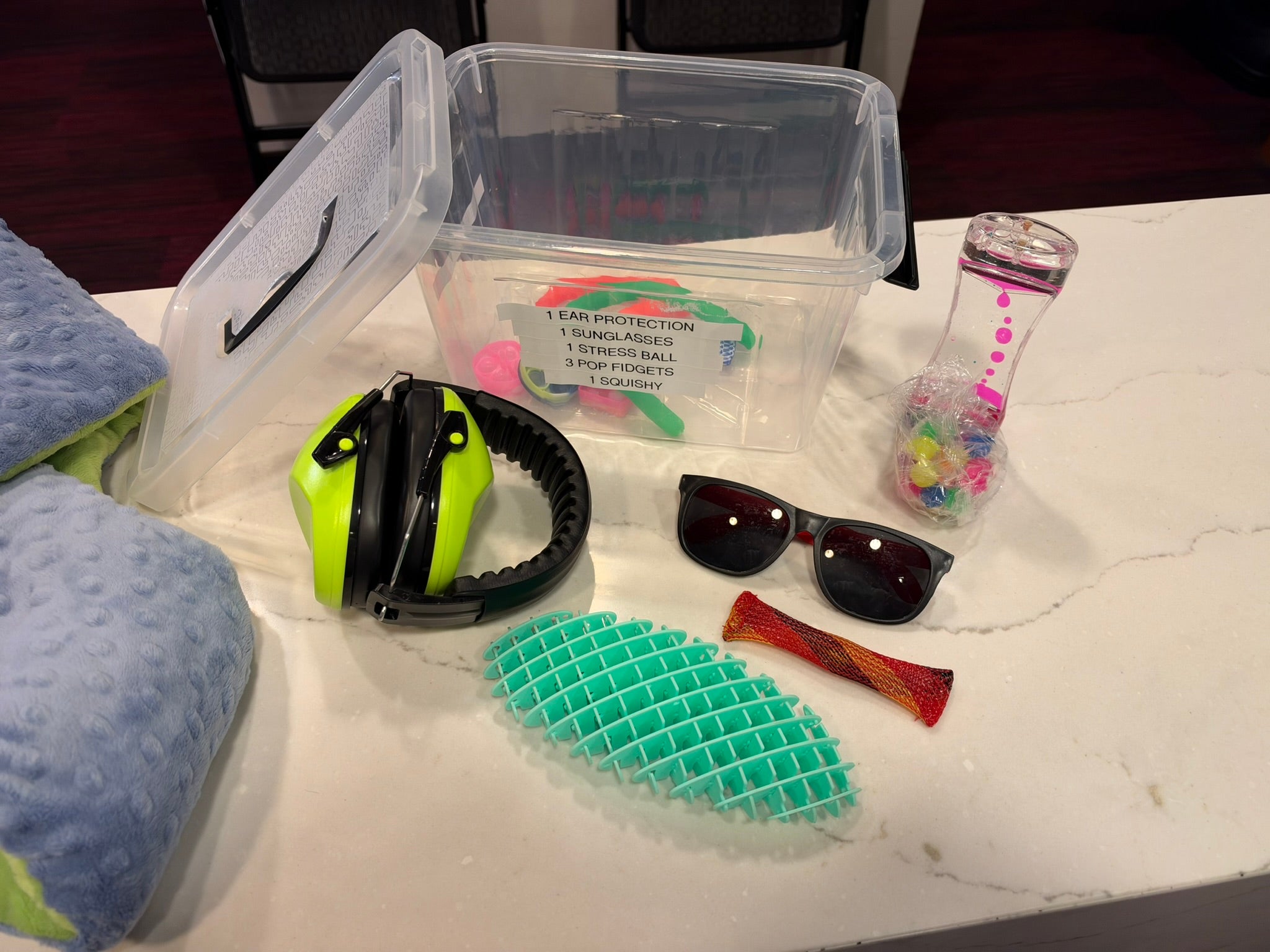
Sensory kits, which are free to rent out, are available at the Ellie Caulkins Opera House, the Buell Theatre and Boettcher Concert Hall, and guests can use them at any performance. Holding and touching different textures can help people feel calmer, stay focused or simply get comfortable in a busy space. Many children and adults with autism, ADHD or sensory processing challenges find tools like these helpful, but the kits are for anyone who could use a little help settling in.
Each kit includes headphones in kid and adult sizes, along with a variety of quiet, non-light-up items that offer a range of textures to touch and hold. Because what soothes one person may not work for another, the kits offer variety. The goal is that a parent or guest doesn’t have to worry about leaving the theater when things feel like too much, because help is already there.
“Where we are can be a scary or overwhelming place,” said Carol Krueger, guest experience manager for the Arts Complex. “It’s large, and there are 2,000 other people coming with you. The kits are just one small way in which we can welcome more of the community into our theatres.”
Built for the Ballet, available for all
The kits began as a way to support Colorado Ballet’s sensory-friendly performances. Krueger said the Ballet “jumped in with both feet,” bringing in consultants and training for staff. She and a colleague were sent to that training, then built the kits to support the performances.
Colorado Ballet’s work on the pathway to sensory-friendly performances started in 2018, starting with school assembly performance. Emily Herrin, director of education and community engagement for Colorado Ballet, started dreaming bigger.
“I asked ‘what if we did it in the Ellie Caulkins Opera House,’” said Herrin. “Our artistic director held his breath and jumped right in with me.”
In 2022, the Ballet piloted two invitation-only student matinees of “The Nutcracker.” Interest was high, but timing proved a barrier for many families. The performance moved to a Sunday evening the following year, then to its current slot: 1 p.m. on the Sunday after Thanksgiving. The audience grew from about 100 people at the first performance to an expected 1,000 tickets, which the company considers a sellout for this type of offering.
“You have to earn the trust from community members,” Herrin said. “You have to learn and do it right.”
Families told the Ballet that the sensory performances gave them the confidence to try a typical one. Some used it as a stepping stone and started a new family tradition. Others learned they could have been attending regular performances all along with just a little support. That feedback led the Ballet to ask DAV whether sensory kits could be available at every show.
This season, with funding from the National Endowment for the Arts, the Ballet added a second sensory-friendly performance for “Don Quixote,” its first season with two sensory-friendly performances. The response from the community was enthusiastic.
“The biggest request from families was not to stop and to offer more,” said Herrin.
A broader goal
Herrin’s dream is a sensory-friendly performance for each of the Ballet’s four story-focused ballets, along with sensory kits at every performance and a dedicated sensory break space in the theater. The company is committed to two sensory performances per season going forward.
For the Ballet, the work comes from a belief that the arts are for everyone. “It’s not just removing the barriers but actively making it easier for them,” Herrin said. She noted that the adaptations are minimal, since ballet is already fairly sensory-friendly. What matters more is the relaxed environment. Dancers meet with families before each performance and ushers and security staff ask thoughtful questions about how to support guests.
Arts Complex Guest Services staff and house managers have also been trained to welcome guests at any performance who may make sounds or move in ways that are simply part of how they experience a show. “That individual that makes a sound, a noise or a twitch – that is their being,” Krueger said.
“Any time we are making an adjustment with one individual’s lived experience in mind, we are benefiting so many people,” Herrin said. “It means a lot to be in a space where a child can stand up to watch and no one in the audience is looking at them.”
DAV’s Guest Services team is working to bring more awareness to the program while gathering patron feedback on what else to include in the kits. Krueger hopes demand will outgrow the current supply.
“The goal is that we get so many requests that we need more.”